
Summary
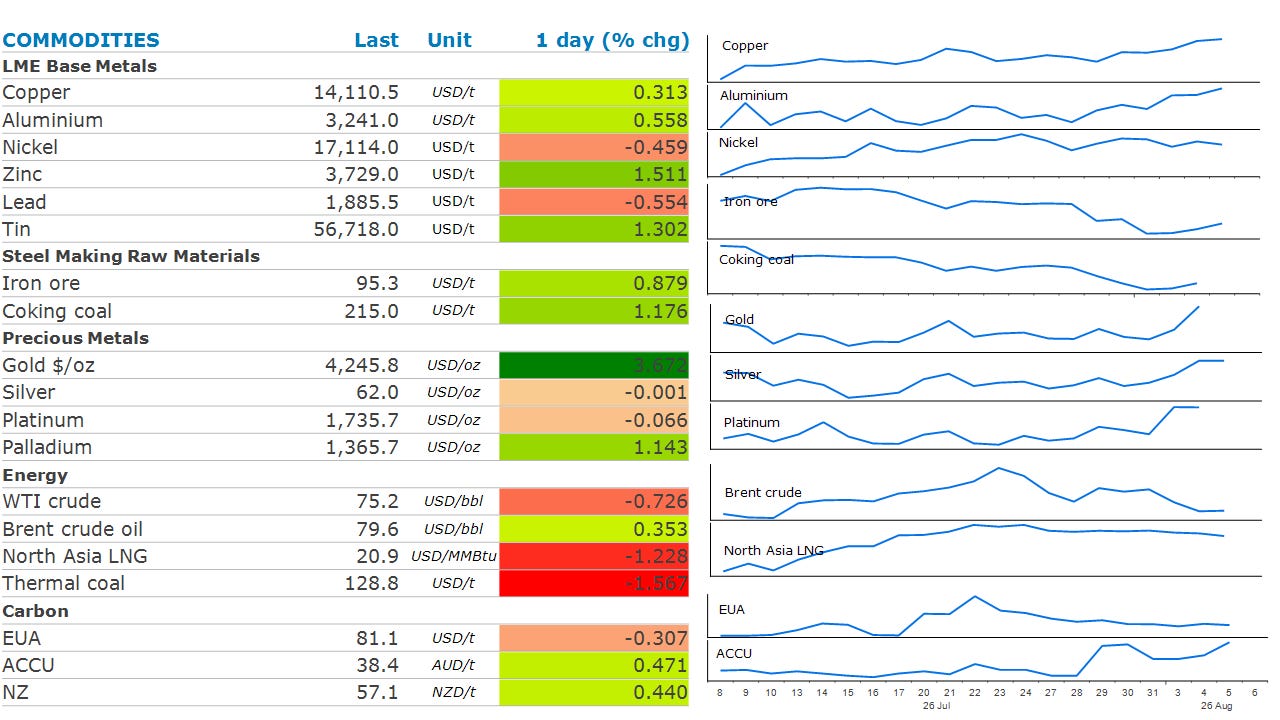
A proposed deal to reopen the Strait of Hormuz pushed the energy sector lower. Precious metals gained, as expectations of rate hikes eased.
Prices and commentary accurate as of 07:00 Sydney/05:00 Singapore/17:00(-1d) New York/22:00(-1d) London.
Ahead Today
Public holidays: None listed
Central bank speakers: St. Louis Fed President Alberto Musalem makes a speech and participates in a moderated discussion at an event hosted by the Center for Public Policy Debate in Sao Paulo; Czech Republic rate decision; Mexico rate decision
Economic data: Australia: trade; Eurozone: retail sales, ECB economic bulletin; Czech Republic: industrial output; Germany: factory orders; Italy: industrial production; Spain: industrial production; Sweden: CPI; Taiwan: CPI; Thailand: CPI; US: wholesale inventories, initial jobless claims, 08:30 NY / 13:30 UK / 23:30 AEDT
Commodities reports: Singapore onshore oil-product stockpile weekly data; Insights Global weekly oil-product inventories in Europe’s ARA region; EIA weekly report on US natural gas inventories, 10:30 NY / 15:30 UK / 01:30 AEDT Fri; US updates its outlook for the 2026 Atlantic hurricane season
Events: Nintendo earnings; Warner Bros. Discovery earnings; Japan marks the anniversary of the US atomic bombing of Hiroshima with the annual Peace Memorial Ceremony; Tennessee holds primary elections; NASA astronauts scheduled to conduct a spacewalk outside the International Space Station, the first of three planned for August; Earnings: Harbour Energy; Serica Energy; Canadian Natural Resources; ConocoPhillips; Orlen
Market data: None listed
Listen to today’s 5in5 with ANZ podcast for more on the global economy and markets.
Market Commentary
Crude oil extended recent losses, as signs of a deal on the reopening of the Strait of Hormuz intensified. Iran said it reached an agreement with Oman on a proposed route for shipping through the waterway, however the details are still to be ironed out. Both inbound and outbound routes are said to be at the northern part of the strait in Iranian territorial waters. The temporary route is proposed to be used for two to four months. However, Iranian Deputy Foreign Minister, Kazem Gharibabadi, said “this understanding does not mean the full reopening of the Strait of Hormuz”. There was no mention of the US in the proposed agreement. The safe passage of vessels through the strait has been a sticking point that the US has refused to bend on since Iran closed the waterway. Any optimism on the reopening of the strait was tempered by reports that Houthi militants had targeted a Saudi Arabian oil tanker in the Gulf of Aden, just south of the Bab al-Mandeb Strait. The group also said it will target Saudi vessels diverting to the north of the Red Sea.
The release of inventory data in the US had little impact on the market. Commercial inventories of crude oil rose last week by 2,479kbbl. This was offset by a drawdown of the US Strategic Petroleum Reserve by 2,841kbbl. However, refined petroleum products recorded further falls. Distillate stockpiles fell by 3,473kbbl, while gasoline was down 1,643kbbl. The drop in distillate was driven by a surge in exports, which rose to 1.9mb/d last week. That is the largest weekly number on record. Global diesel markets have suffered the most from the supply disruptions, both in the Middle East and Russia.
Natural gas in Europe and Asia fell on rising hopes of a deal that would see the Strait of Hormuz reopened. This was aided by reports that three LNG tankers were docked at Qatar’s Ras Laffan export facility to load fuel, according to ship tracking data from Bloomberg. This signalled the LNG exporter was potentially ready to resume production from the world’s largest gas export complex. Any resumption of exports would be a welcome relief to European gas users. The EU’s storage facilities are only 57% full and will require a significant number of LNG shipments to reach its target of 90% before the start of the heating season. However, stronger demand in Asia is likely to raise competition for cargoes in the coming months.
Gold surged as the prospect of a deal to reopen the Strait of Hormuz would lower inflationary pressures and make it less likely the Fed would hike rates. Markets are currently pricing-in a single US rate increase by year end, down from two as recently as last week. However, Fed Governor Cook warned that she’s ready to raise rates if inflation doesn’t slow, as policymakers don’t have the luxury of waiting before inflation returns to their 2% target. Gold’s rally gained momentum after prices broke above a key technical resistance level.
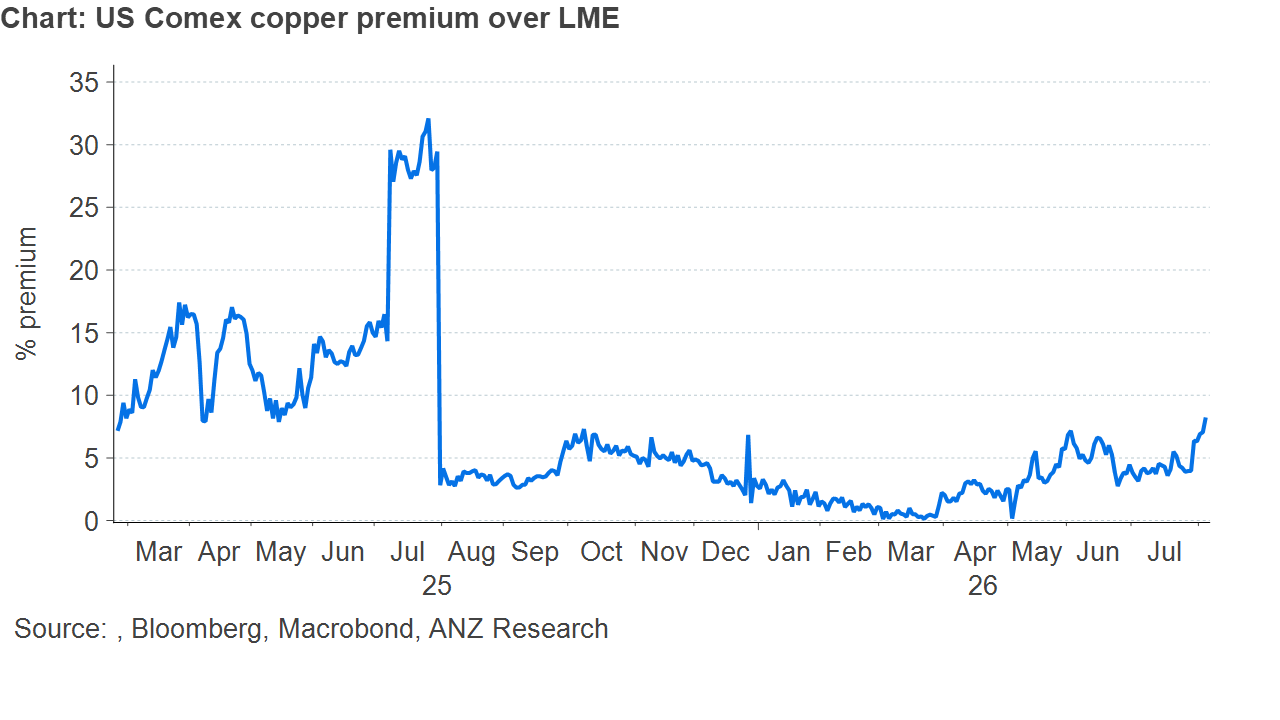
The improved risk appetite across markets triggered by the proposed deal to reopen Hormuz also lifted the base metal sector. Copper led the gains, as the market keeps an eye on the inflow of metal into the US, which is keeping the global market tight. Speculation that the US will impose a tariff on imports of copper has spurred theUS imported more than 200kt of the metal in July, the biggest monthly inflow since 2014. This has lifted the premium of copper being sold in the US COMEX exchange over the LME up to over 8%.
Chart of the Day
Speculation of a US tariff on imports of refined metal continue to swirl around the copper market. This has seen traders continue to front run any levy by building inventories in the US. This has sent the copper prices on the US-based Comex to a 2026 high of USD6.73/lb. That is currently a 8% premium over LME copper. Flows of metal into the US have accelerated since the 30 June deadline for Commerce Secretary Howard Lutnick to recommend action on tariffs passed without an announcement.
5in5 with ANZ Podcast
